Self-service equipment booking system for shared reliability lab equipment, with public calendar booking, admin inventory control, booking operations, project tracking, and usage analytics.
01
Overview
We built a web-based equipment booking platform for a reliability lab that needed a clearer way to manage shared testing devices. The public side lets users browse equipment groups and request bookings without an account, while the admin side centralizes devices, groups, bookings, projects, and utilization reports.
02
Business Problem
Shared lab equipment is difficult to coordinate when availability, group booking rules, borrower details, and usage reporting are split across manual messages or spreadsheets. The lab needed a system that could show real-time availability, reserve whole equipment groups when required, and give admins an operational view of every booking state.
03
Solution
We delivered a booking platform with a public calendar for users and a protected admin workspace for operations. The system supports searchable equipment folders, bookable groups, date and time booking flows, device quantity and condition tracking, booking handover and return actions, project labels, and reporting dashboards with CSV export.
Key Features
Public booking calendar with day, week, and month views
Searchable equipment folders and bookable equipment groups
Booking form for date, time, borrower details, project, and notes
Admin device inventory with quantity, upcoming bookings, condition, and active status
Group booking rules that reserve all devices in a bookable group together
Booking operations for handover, return, cancellation, and filtering
Project catalog used inside booking workflows
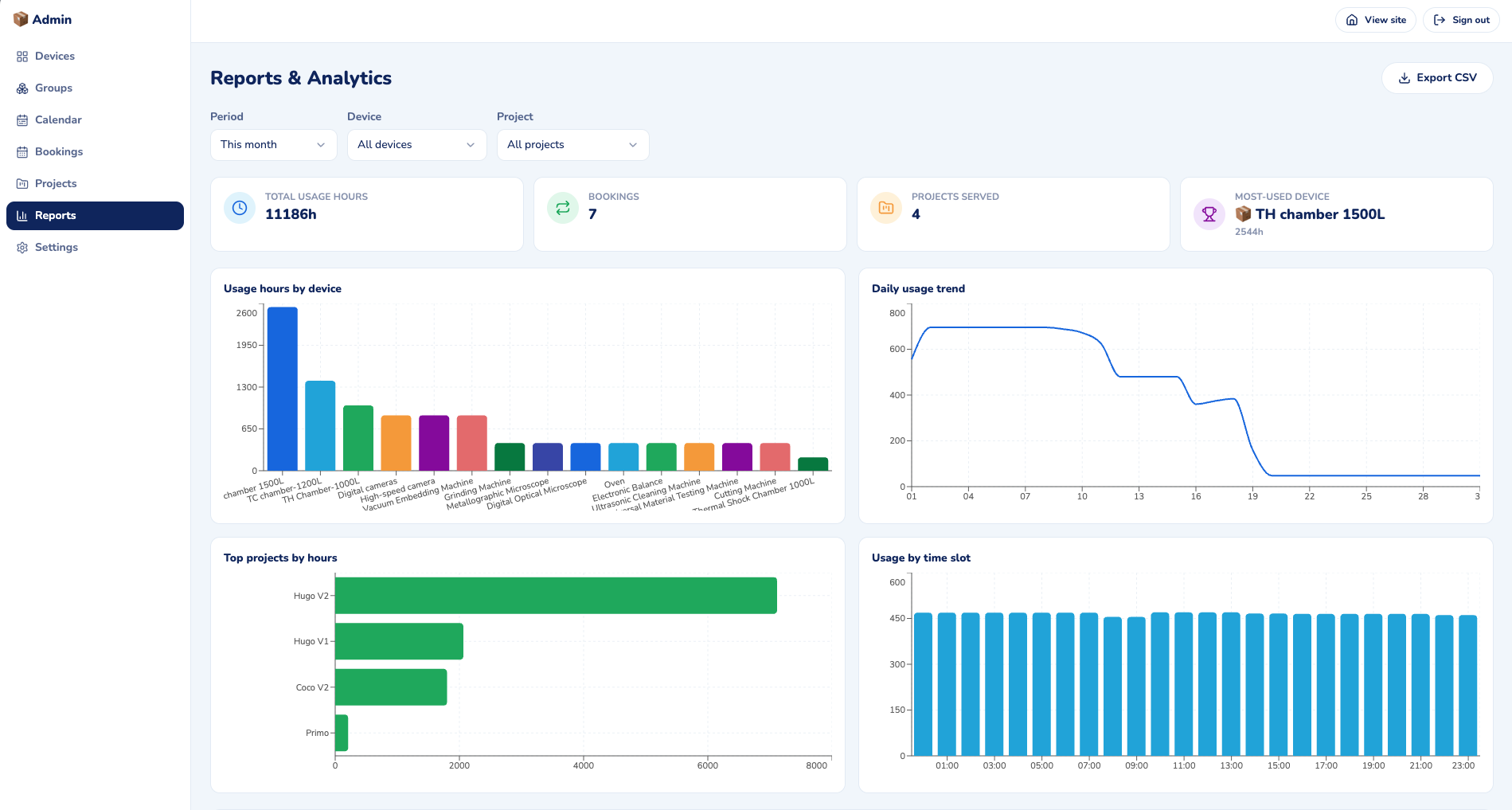
Reports & analytics dashboard with usage hours, utilization, project metrics, and CSV export
Impact
Moved shared-equipment scheduling into a visible self-service calendar
Reduced collision risk by making bookable groups reserve all related devices together
Gave admins one place to manage inventory, booking states, projects, and usage reporting
Made utilization visible through analytics instead of manual reconciliation